The wage gap is real; longitudinal data suggest much of it appears before the wedding.
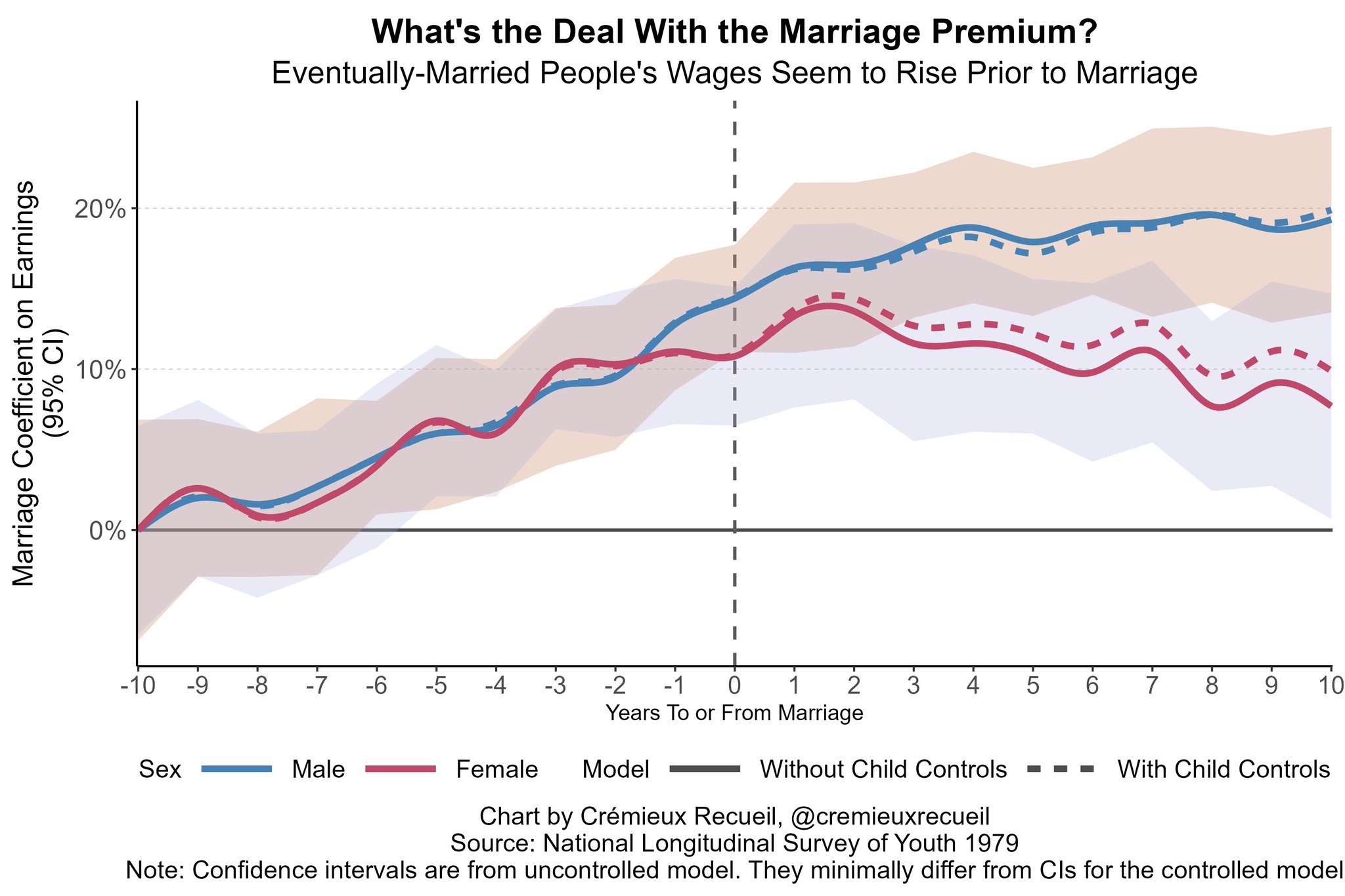 Replot and analysis: Crémieux; data: NLSY79; method follows Dougherty (2005)
The BLS figures compare different groups at one point in time; they do not show that marriage caused the higher pay. The longitudinal analysis found that men’s earnings began rising roughly six years before marriage, and a younger NLSY97 cohort showed the same broad pattern. Older first-time grooms showed no premium, men in “shotgun” marriages had the same premarital gains as other grooms, and wage declines often began before divorce. The likelier explanation is selection and maturation: traits and life changes that make marriage more likely may also raise earnings.
Grouped bars of 2023 median usual weekly earnings for full-time workers: married men $1,421 against never-married men $945, and married women $1,143 against never-married women $876.
Married men out-earned never-married men by half
A longitudinal sample found men's earnings began rising roughly six years before marriage, so much of this gap appears before the wedding.
The numbers
| Median weekly earnings, full-time workers, 2023 | Married | Never married | Note |
|---|---|---|---|
| Men | $1,421 | $945 | a 50% gap |
| Women | $1,143 | $876 | a 30% gap |