U.S. crude passes $90 a barrel, up 12% in a week, as U.S.-Iran war intensifies
European natural-gas futures closed at their highest level since January 2023, while U.S. stocks fell and Treasury bond yields rose.
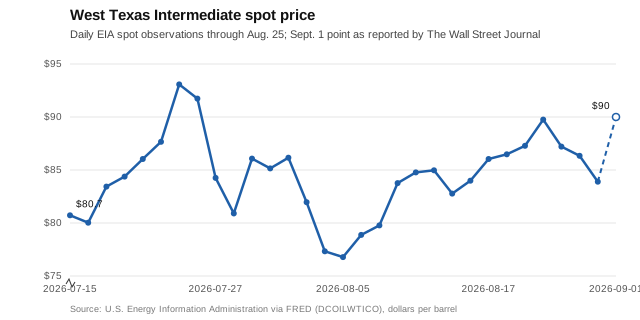
U.S. benchmark crude exceeded $90 a barrel on Tuesday, Sept. 1, 2026, as fighting between U.S. and Iranian forces intensified. That was a reported increase of about 12% over one week. European natural-gas futures reached their highest level since January 2023. U.S. stocks fell and government bond yields rose the same day as markets priced in greater risks of disrupted energy supplies and renewed inflation.
What the Hormuz disruption has done to flows, insurance and freight:
- Ship-tracking estimates put oil moving through the Strait of Hormuz at 2 million to 6 million barrels a day, against about 15 million before the war — a 60% to 87% shortfall.
- War-risk insurance on ships entering the Gulf ran 7.5% to 10% of a vessel's hull value on July 22, up from 1% to 3% only weeks earlier, per broker Marsh.
- Tanker freight on the Argus index reached $11.09 a barrel by April 8, up 54.6% from $7.17 before the war, and rate reports on Sept. 1 described new records.
RELATED
Trump pressed about a dozen refiners at the White House on Sept. 1 to expand capacity, with gasoline at $4.08 a gallon, about 90 cents above a year ago
The meeting covered faster permitting, regulatory changes and new investment, and the White House paired it with the Aug. 28 Venezuela deal giving the United States majority control of more than 65 billion barrels of reserves. Refiners have reported bumper profits through the war; no company committed to a specific output increase. The AAA national average was $4.08 on Aug. 31.