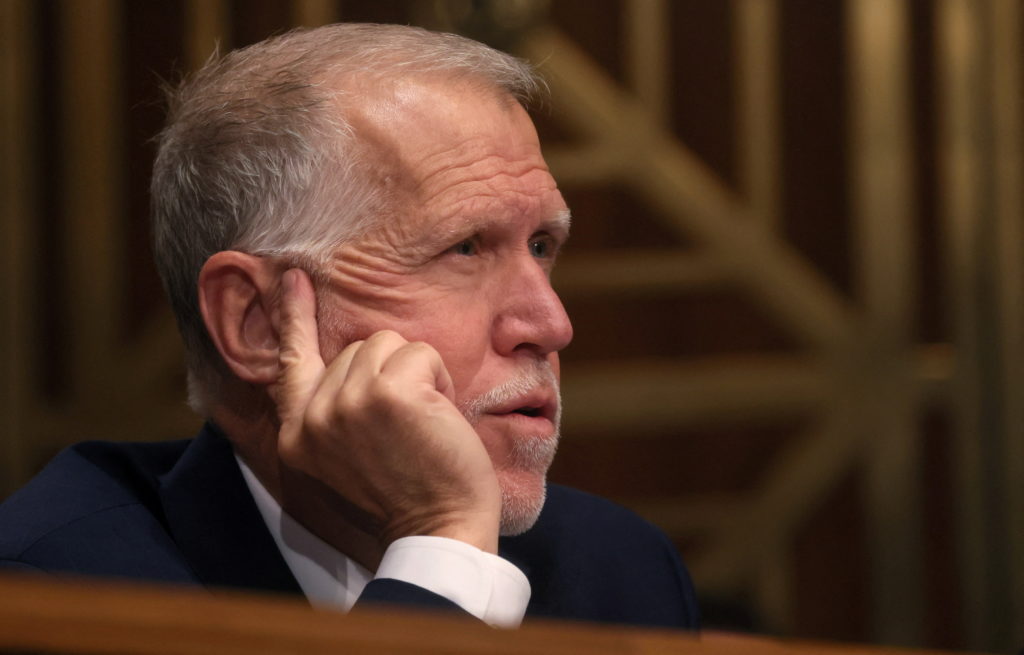
Four Republican senators join Democrats in demanding Trump reverse his Russian diesel deal, saying he skipped steps the law requires
Thomas Massie (Rep-R Kentucky) backed the deal and urged lifting sanctions on other petroleum products, copper and aluminum too.
- Sept. 15 — Trump announced a Russia-Ukraine truce on energy strikes; Kyiv called it conditional. - Sept. 16 — The House passed a bill letting the president put tariffs of up to 100% on the five biggest buyers of Russian oil or gas, 262-159, per Reuters. - Sept. 18 — Trump signed it, per the White House; the law, named for Sen. Lindsey Graham, who died in July, also sanctions Russian officials and shadow-fleet tankers. - Sept. 21–23 — Trump pressed Ukraine to stop hitting Russian refineries, citing diesel prices; Zelensky proposed a mutual halt on energy and port strikes. - Oct. 4 — Putin added a sale of Lukoil's foreign oil assets to talks; buyers include Witkoff and Kushner business partners. - Oct. 10 — Treasury suspended Russian diesel sanctions until April 7, 2027, after Trump said Russia would send diesel to the U.S.; Zelensky called it "a happy birthday present for Putin." - Oct. 11 — Russian glide bombs killed 20 in Zaporizhzhia; Putin told Trump talks would not resume soon.
ContextThe 2022 Ending Importation of Russian Oil Act bans Russian fuel imports; lifting the ban requires the president to consult four congressional committees 45 days before certifying, then wait 90 more days, and overriding a Trump veto takes 290 House votes and 67 senators. U.S. diesel averaged $6.20 a gallon in the week of Oct. 5, per the EIA, against $3.71 a year earlier, and the first 300,000-tonne shipment equals about three-quarters of one day's U.S. use.
PBS NEWSHOUR12 sources