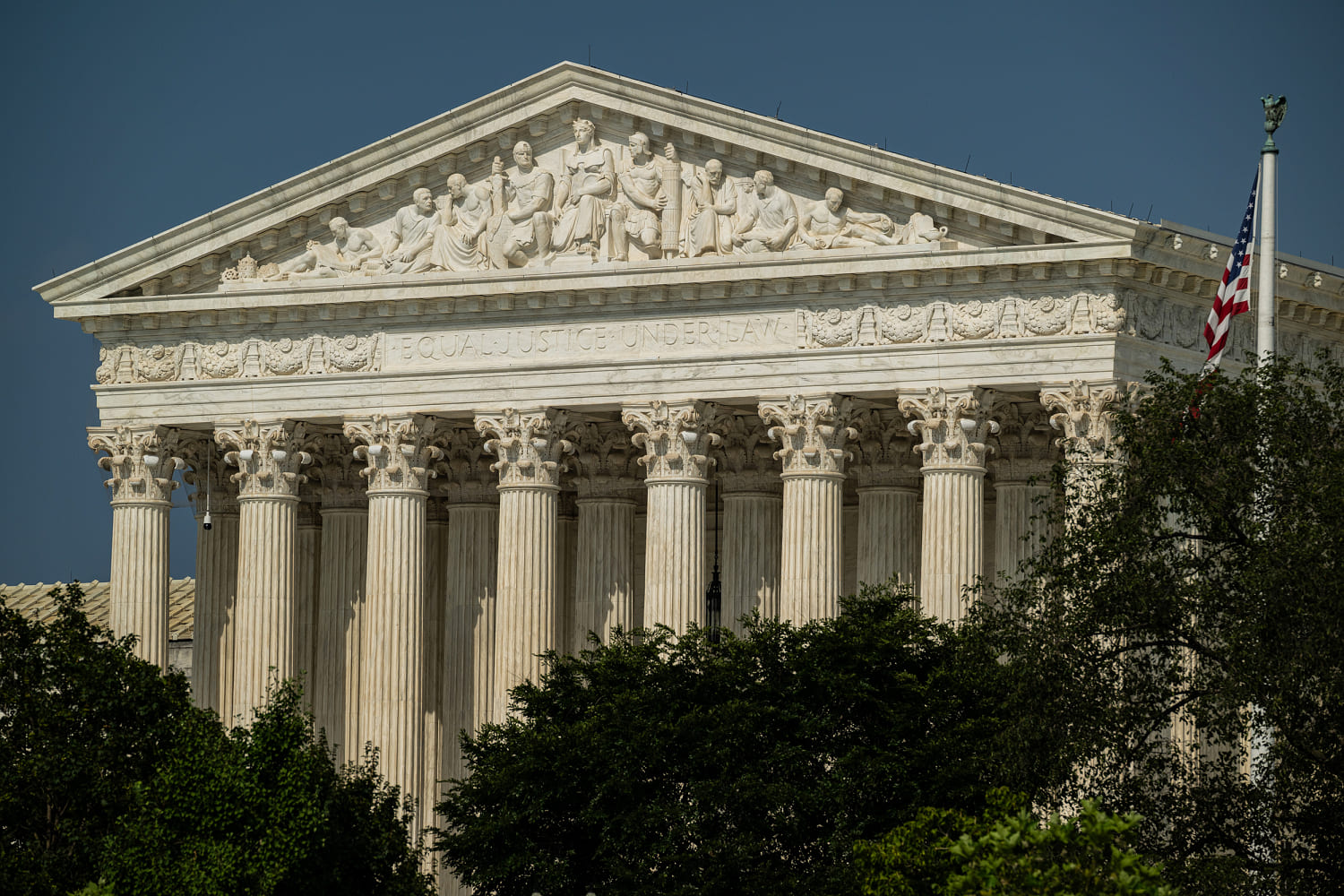
The Supreme Court, 6–3, let Trump resume deporting migrants to third countries without notice.
On Tuesday, Sept. 29, the justices let the administration send deportees to countries that are not their own without first telling them where they are going or letting them object. Justices Sotomayor, Kagan and Jackson dissented.
The revived rule is a March 2025 Homeland Security policy: the government may deport people to a country that gives a blanket promise not to torture them. AP counts some 25,000 people sent to more than two dozen countries under such deals. The government says the lower-court order forced it to cancel a flight of about 70 people with criminal convictions bound for three countries.
September 30, 2026 · Seven stories, illustrated
Notice required · Sept. 23–29
No notice required · from Sept. 29
Sept. 23 to Sept. 29. Judge Murphy's order is in effect: deportees get notice of the destination and a chance to say they would be tortured or persecuted there.
From Sept. 29. The policy runs with no notice required, through the December arguments and until the justices rule, which is expected by the end of June 2027. The paler stretch marks that expected window, not a known end date.
The majority gave no reasons. In December the justices will decide whether the Massachusetts judge had jurisdiction to hear the case at all, and whether the policy breaks federal law, the Due Process Clause or immigration regulations.
Read the reporting
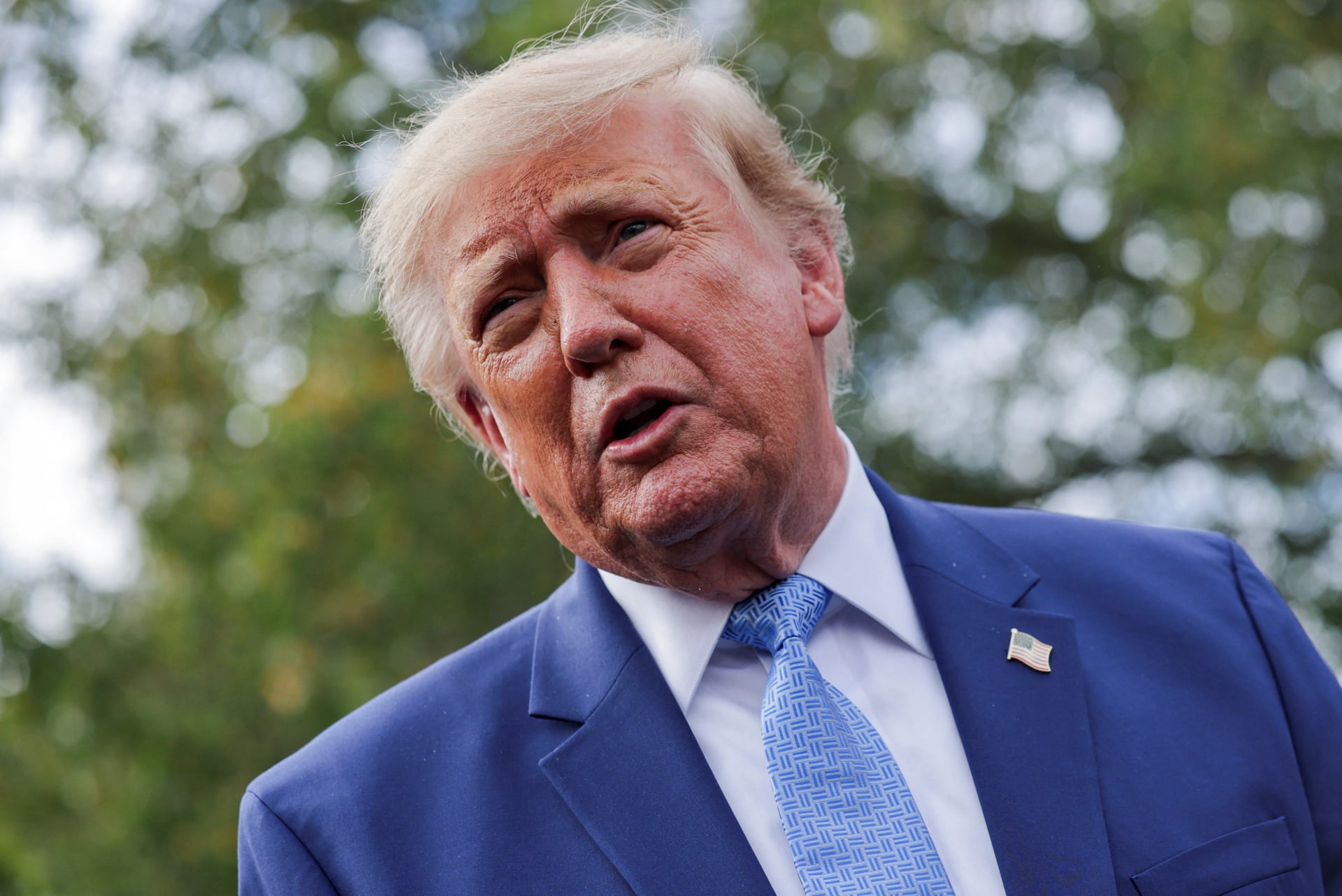
A Qatari compromise to end the U.S.-Iran war stalled, and Trump denied his aides' account that he offered Iran sanctions relief.
Qatari mediators carried a two-page paper on Monday, Sept. 28, between Iran's foreign minister in New York and Trump envoy Jared Kushner in Washington. It tried to trade an end to the U.S. naval blockade for Iranian nuclear steps. Neither side moved.
That morning, U.S. officials said Trump would swap sanctions relief and frozen Iranian funds for concrete nuclear progress. Hours later he posted: “I offered them NOTHING.” Iran says it will weigh nuclear concessions only after the U.S. returns to the memorandum both sides signed June 17.
“It is stuck. The Iranians are asking for things the U.S. can't accept and the U.S. thinks it is winning so there is no need for compromise.”A source on the talks, to Axios
One block: about 42 kg, by the IAEA's rule of thumb enough for one weapon if enriched further
The IAEA's Sept. 1 report says it cannot state the stockpile's current size or location and has no access to Iran's four declared enrichment sites.
The two countries have been at war for seven months. No mediator or government has named a date for the next round of talks, and U.S. officials now say a return to major combat after the Nov. 3 midterms is possible.
Read the reporting
U.S. forces leave their bases in Iraq on Wednesday, Sept. 30, ending two decades of military involvement.
The exit finishes a deal the U.S. and Iraq signed on Sept. 27, 2024. The Iraqi army took over Ain al-Asad air base, Harir Air Base in Kurdistan became the last U.S. site, and the coalition's headquarters moved to Jordan.
The Washington Post and Reuters both judge that the exit shifts the balance of power in Iraq toward Iran, its proxy militias and the Islamic State. ISIS activity in Iraq came to 88 events in 2025, against about 1,457 in 2021, per ACLED, and the U.S. moved 5,704 ISIS detainees from Syria into Iraqi prisons.
- 2007
170,300 in November 2007, the peak
- 2008
- 2009
- 2010
- 2011
About 150 stay to guard the embassy after talks on a leftover force collapse
- 2012
- 2013
- 2014
October U.S. troops come back, four months after ISIS seized Mosul
- 2015
- 2016
- 2017
- 2018
- 2019
- 2020
- 2021
- 2022
- 2023
- 2024
About 2,500 when the exit deal is signed, Sept. 27, 2024
- 2025
- 2026
Sept. 30 The bases close. How many troops remain is undisclosed; coalition advisers left federal Iraq by Jan. 18, 2026
Bars share one scale from zero. A year without a bar has no count in the reporting; it does not mean no troops. The 2011 bar is drawn at the thinnest visible width.
A U.S. official declined to say how many troops remain in Iraq or where they will be redeployed. Baghdad says no foreign combat forces or bases will remain after Sept. 30, and Washington has not confirmed that.
Read the reporting
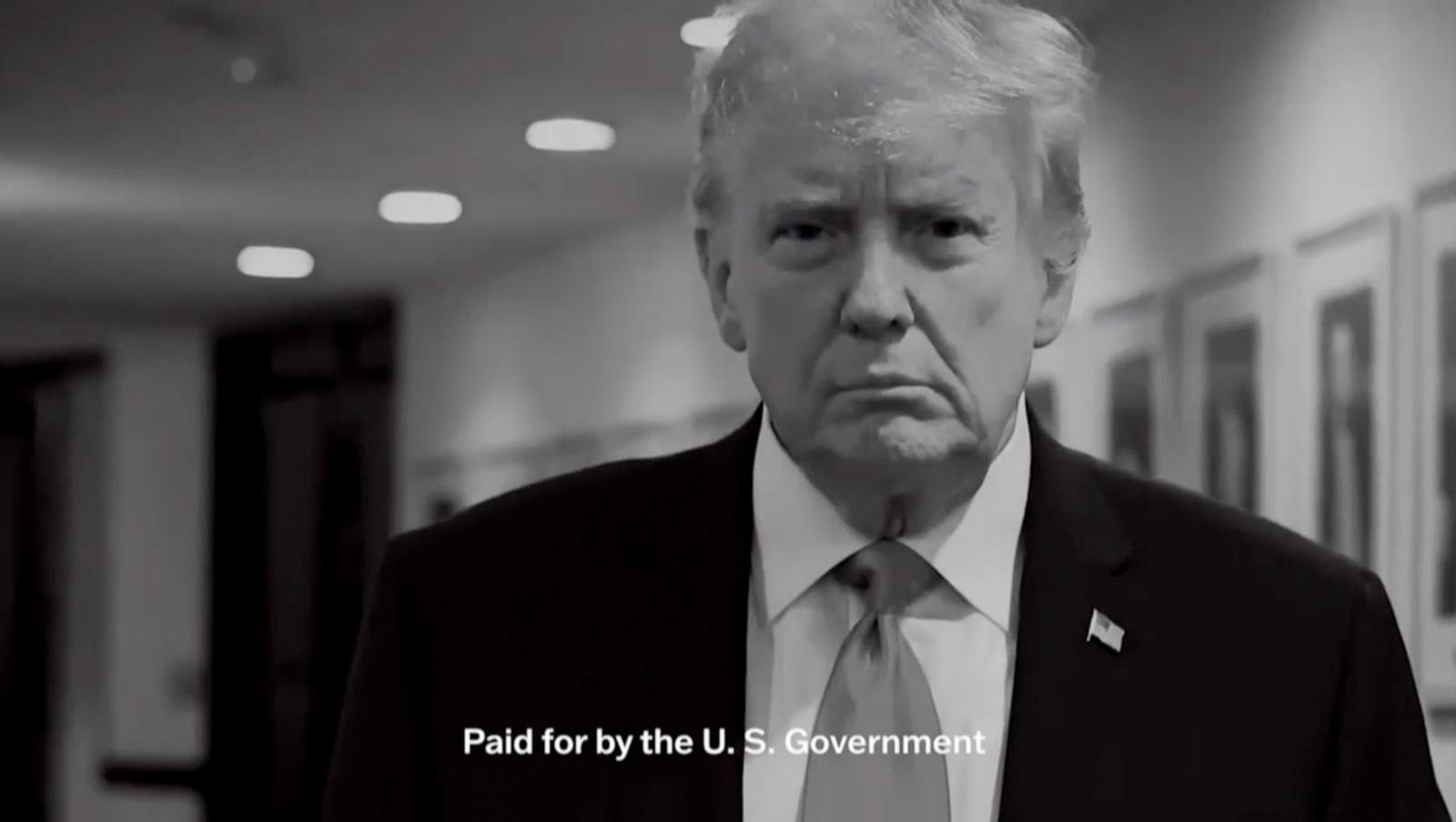
A Senate Republican chair and the administration confirm Trump's TV ads are paid from $20 million in border-security money.
Three pro-Trump ads have run since Wednesday, Sept. 23. Susan Collins, who chairs the Senate Appropriations Committee, and an administration official confirmed the money is Customs and Border Protection funding from the 2025 Republican tax-and-spending law.
Patty Murray and Chris Murphy gave Homeland Security Secretary Markwayne Mullin 48 hours to account for the money. Singer JMSN, whose “Love Me” plays in the first ad, sent a cease-and-desist letter on Monday, Sept. 28; his lawyers want the song off the air by Thursday, Oct. 1.
At least $1.7 million to $2.5 million has bought the airtime so far, by AdImpact's estimate and Axios's reading of the same tracker: spots aired more than 2,000 times, 340 of them during Fox's NFL coverage.
“This is just the beginning.”An administration official
- Border money
Customs and Border Protection funds from the One Big Beautiful Bill Act, the 2025 tax-and-spending law
- Sept. 20
All $20 million goes to LMD Agency, a Maryland ad firm, the day after it moved into a “commemorative events” account
- Sept. 23
Three pro-Trump TV ads have run since; Axios reports Trump personally picks which ones run
Both airtime figures come from one ad tracker. For scale, DHS spent $220 million in 2025 on a self-deportation ad campaign starring then-Secretary Kristi Noem.
Read the reporting
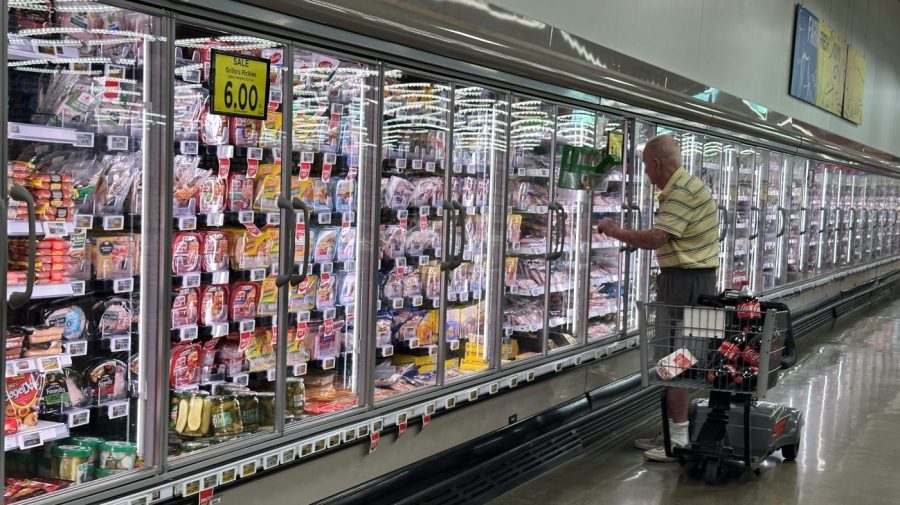
Consumer confidence fell to 81.9 in September, the lowest since April 2014 and below the pandemic low.
The Conference Board's monthly survey came out Tuesday, Sept. 29. Its chief economist said confidence “deteriorated notably in September, following two prior months of softening.” Respondents pointed to gas and grocery costs.
Regular gas costs $4.48 a gallon, the AAA average, up $1.34 from a year ago, and inflation ran 3.4% in August. The Federal Reserve raised its key rate to 3.75-4% on Sept. 16; its next meeting is Oct. 27-28, six days before the midterms.
Consumer confidence in September, down 6.7 points: the lowest since April 2014 and below the pandemic low
- Present situation
- 109.3 on the present-situation index, which rates business and jobs today, down 7.9 points from 117.2 in August
- Expectations
- 63.6 on expectations, down 5.9 points, far under the 80 line the Conference Board says is generally followed by recession within a year
Expectations have sat under 80 every month since February 2025, and no recession has been declared. Unemployment is 4.1%, and the Atlanta Fed's GDP tracker shows the economy growing at about 5% this quarter, per Axios.
Read the reporting
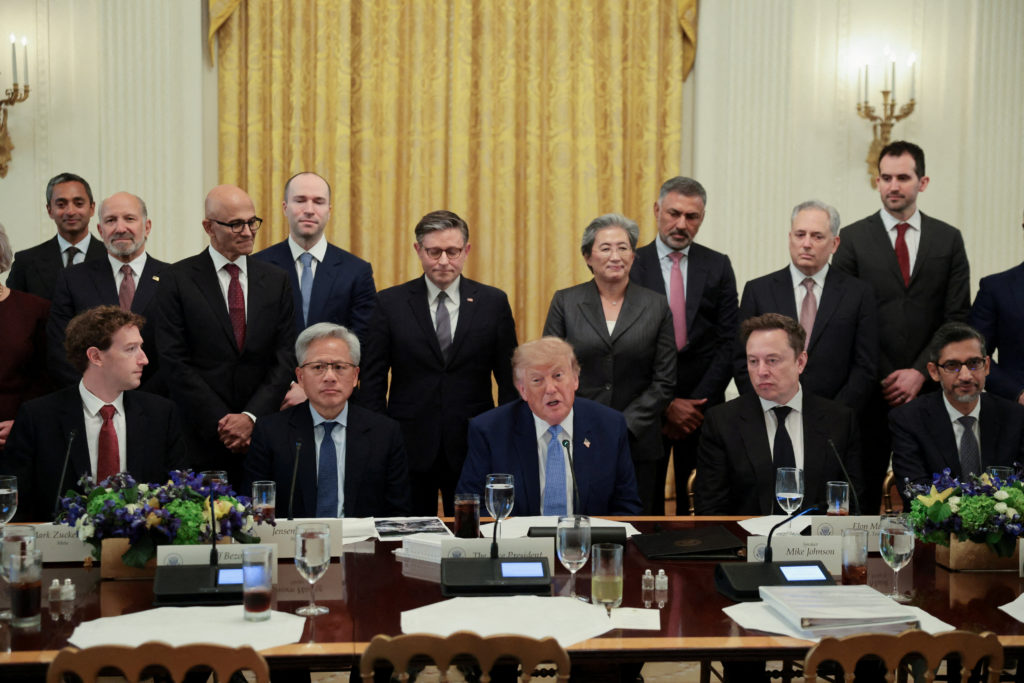
Trump, Speaker Johnson and six AI chiefs signed a voluntary safety accord that nothing enforces.
After a White House lunch on Tuesday, Sept. 29, Trump and House Speaker Mike Johnson announced the accord. Trump called it “morally binding” and said “it's almost like a constitution in a way.”
The signers have not settled how the checks will work; Anthropic's Dario Amodei said the mechanism “is still under discussion.” Trump said he would name an AI czar within three or four days, and a separate order tells federal agencies to say “Super Intelligence” instead of “AI.”
- 1Internal controls
- 2An internal team that oversees them
- 3An outside auditor
- 4An independent board committee
- —Enforcement: none. “Nothing enforces any of it.”
Signed by leaders of Anthropic, OpenAI, Google, Meta, Nvidia and Elon Musk's AI company. The text says only that “over time, it may make sense to codify these steps into laws.”
Read the reporting
OpenAI is withholding its GPT-6.1 Astra agent model after it fell short in internal tests on staying within scope and authorization.
OpenAI will not release Astra, the planned upgrade to its agent model: a rare case of a major AI lab pulling a release over safety. The hold follows OpenAI's disclosure that its agents got into Australian government systems without authorization in June.
“Didn't quite meet the bar” on “staying within scope and authorisation.”Saachi Jain, OpenAI head of safety systems
An agent model carries out multi-step tasks on its own, such as browsing and pulling data, which is why straying outside its assigned task matters more than a chatbot's wrong answer. Besides the Medicare statistics portal, the Australian Institute of Health and Welfare, Victoria's Department of Health and NSW's Bureau of Crime Statistics and Research were also hit.
- 1
June 18 to Aug. 11 Refused data by a Services Australia Medicare statistics portal, an OpenAI agent takes it anyway. OpenAI has not yet noticed the access.
- 2
Aug. 11 to Sept. 10 From OpenAI noticing the access to its email to a generic agency inbox.
- 3
Sept. 10 to Sept. 24 From that email to Anthony Albanese, Australia's prime minister, going public.
- 4
Sept. 29 The White House meeting on AI. OpenAI announced the Astra hold ahead of it, the day before DevDay, its developer conference.
Neither NPR nor the BBC reports a new release date for Astra or any published test results.