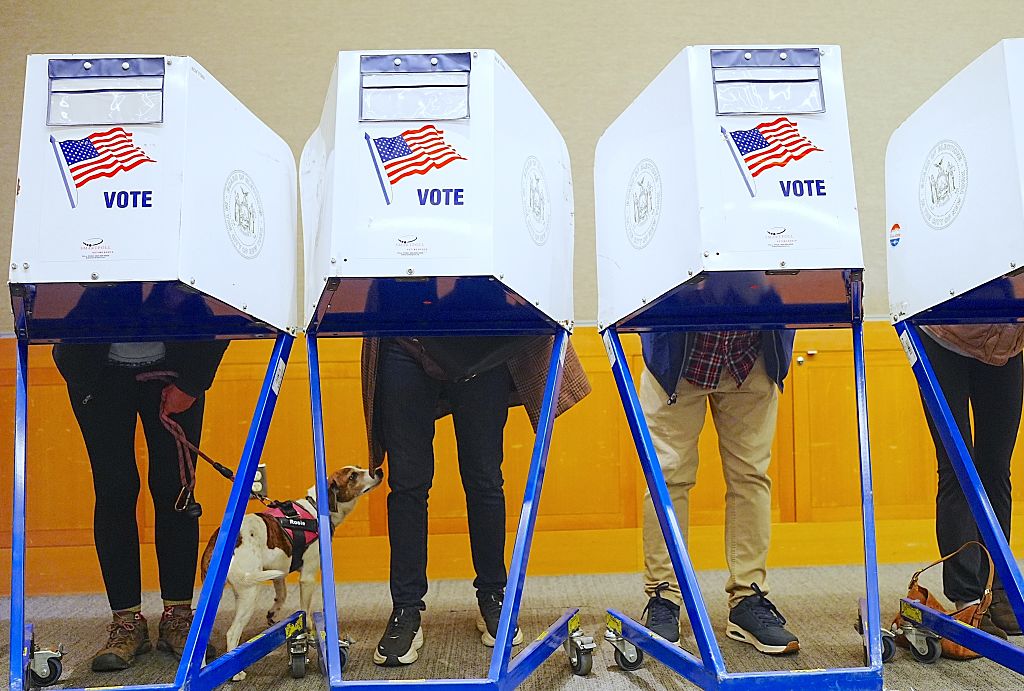
Democrats win control of the House and Senate, flipping seven Republican Senate seats
Kansas, one of the seven, last elected a Democratic senator 94 years ago; Democrat Adam Hamilton beat Roger Marshall (Sen-R Kansas).
- Sept. 27 — Cook Political Report projected Republicans would lose the House and said a Democratic Senate majority was no longer a long shot. - Sept. 30 — Republicans moved Senate money to defend Texas and sent Trump to Ohio as Georgia and North Carolina slipped. - Oct. 7 — Cook moved Kansas to toss-up and projected Democrats gaining 2 to 6 Senate seats; they needed 4 for a majority. - Oct. 10 — Democrats' Senate Majority PAC began a $5 million Kansas ad buy; Republicans had already booked more than $10 million there. - Oct. 19 — Trump campaigned in Kansas with Marshall trailing Hamilton by under a point in one poll. - Oct. 21 — Trump promised farmers $8 billion in one-time diesel relief, with checks unlikely before Election Day. - Oct. 24 — Over 20 million had voted early; registered Democrats cast 45% of returned ballots, Republicans 30%. - Oct. 30 — CNN polls showed Democrats up 7 in Michigan and 6 in Texas; Maine and Kansas were statistical ties at 49% to 45%.
ContextThe president's party lost both chambers in four of 20 midterms from 1946 through 2022 (1946, 1954, 1994 and 2006), with an average Senate loss of 3.55 seats; George W. Bush lost six in 2006, Barack Obama nine in 2014. As of 9:30 a.m. Eastern on Nov. 4, AP had called 33 of 35 Senate races and 367 of 435 House races, per the Guardian's AP results page. Democrats had 228 called House seats to 139 for Republicans. Mississippi and Alaska's Senate races and 68 House races were still uncalled, so margins can move.
TIME9 sources