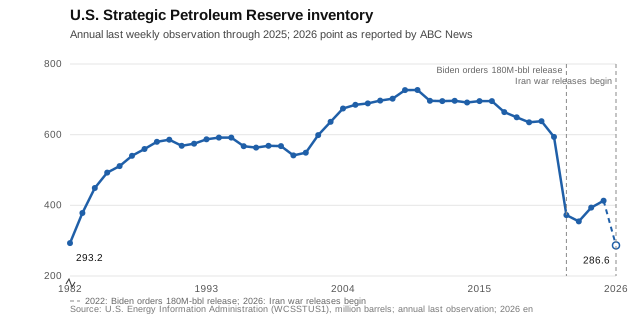
U.S. emergency oil reserve falls to 286.6 million barrels, its lowest since 1982, after releasing 128 million barrels during the Iran war
That is about 40% of the reserve's capacity, and Washington has promised allies another 44 million barrels to reach the 172 million it pledged.
The Strategic Petroleum Reserve — the government's emergency stockpile of crude oil, stored in underground salt caverns along the Gulf Coast — fell to 286.6 million barrels in the week ending Friday, Aug. 28. That is its lowest level since 1982, and about 40% of what the caverns can hold. The reserve lost more than 3 million barrels in that single week. Since the war with Iran began, the United States has released roughly 128 million barrels of the 172 million it pledged to allies, pulling the stockpile down from 415.4 million barrels when the sales started in late February 2026. The releases are part of a coordinated international effort against what officials call a record supply disruption. Gasoline and crude prices have kept climbing through it.
What the emptier reserve can and cannot cover:
- The reserve holds crude oil, not gasoline. Refineries have to process it first, so opening the caverns cannot fix a fuel shortage on its own.
- Pipelines from the reserve reach 24 Gulf Coast refineries but only six elsewhere (Michigan, Ohio, Kentucky). The coasts need ships.
- The four connected marine terminals can move 2.62 million barrels a day, about 60% of the reserve's advertised 4.4-million-barrel daily maximum.
- A 2014 test by the Energy Department's inspector general, the agency's internal auditor, found the reserve could sustain 4.25 million barrels a day rather than the 4.4 million design figure.
RELATED
GAO says aging wells and cavern outages have cut how fast the reserve can actually deliver oil
More than a quarter of the reserve's oil was unavailable in December 2025, before this year's drawdown began, because of construction work and cavern outages, according to the Government Accountability Office, the audit agency that works for Congress.
 Data: POLI