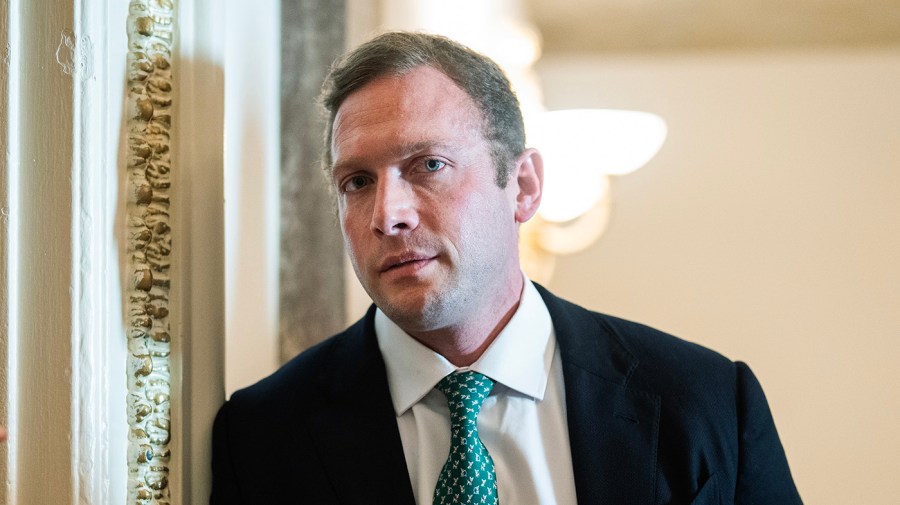
Ohio Republican Max Miller and the Wall Street Journal editorial board oppose Trump's waiver of the Graham Act's Russia sanctions
Trump signed the Graham Act on Sept. 18 and suspended its penalties 28 days later; he says he can impose them "later, or any time that I want."
- Sept. 21 — Trump pressed Zelensky to stop striking Russian refineries, citing high diesel prices; Zelensky then asked for a mutual halt on energy strikes. - Oct. 4 — Putin added a sale of Lukoil's foreign oil assets to the talks; the buyers include business partners of envoys Steve Witkoff and Jared Kushner. - Oct. 10 — Treasury lifted sanctions on Russian diesel until April 7, 2027, with no volume cap and no ceasefire condition. - Oct. 11 — Russian glide bombs killed 20 in Zaporizhzhia; Putin told Trump peace talks would not resume soon. - Oct. 12–13 — Twelve senators, six from each party, asked Trump to rescind the diesel deal; diesel averaged $6.27 a gallon, against $3.67 a year earlier, per AAA. - Oct. 18 — Energy Secretary Chris Wright called the diesel deal a peace "carrot."
ContextThe Senate passed the Graham Act 86-11. Its Section 115 lets the president suspend the law by certifying a national interest, with no expiry and no congressional approval vote; the law itself sunsets on Sept. 18, 2031. Undoing the waiver would take a new law, and overriding a veto takes 67 senators and 290 House members. A comparable fight fell short: in January 2019, a Senate measure to block Trump's lifting of sanctions on companies tied to Russian oligarch Oleg Deripaska won 57 votes, short of the 60 needed to advance.
CBS NEWS17 sources