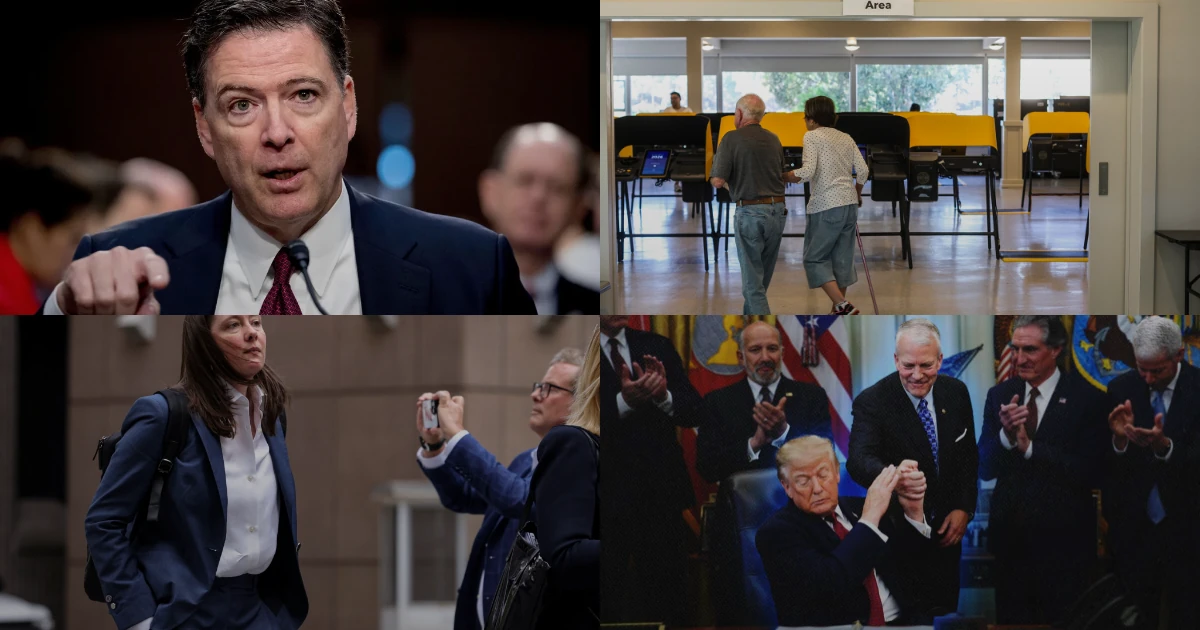
Justice Department charges James Comey a third time, alleging he leaked national defense information to the New York Times in 2016
The 10-year legal deadline ran out Oct. 5, and Comey's lawyers say a charge filed without a grand jury could not beat it.
What became of the first two Comey cases: Virginia false-statement and obstruction case — dismissed Nov. 24, 2025, after Judge Cameron McGowan Currie found prosecutor Lindsey Halligan was unlawfully appointed; DOJ's appeal to the Fourth Circuit is pending North Carolina "seashells" threat case — still pending before Judge Louise Flanagan, with four defense motions unresolved, including claims of protected speech and vindictive prosecution
ContextMost federal crimes carry a five-year time limit. Espionage Act charges get 10 years under a 1950 law, and that law speaks only of an indictment, which "may be found" within the 10 years. An indictment is a charge voted by a grand jury. An information is signed by a prosecutor alone. Federal rules require an indictment for any felony unless the defendant waives that right in open court. Without a waiver, there can be no plea or trial on an information. The general five-year law names both kinds of charge. Appeals courts, including the 7th Circuit in 1998 and the 11th Circuit in 2025, have read it to mean a filed information stops the clock even without a waiver. The 1950 espionage law does not mention an information.
WASHINGTON EXAMINER10 sources