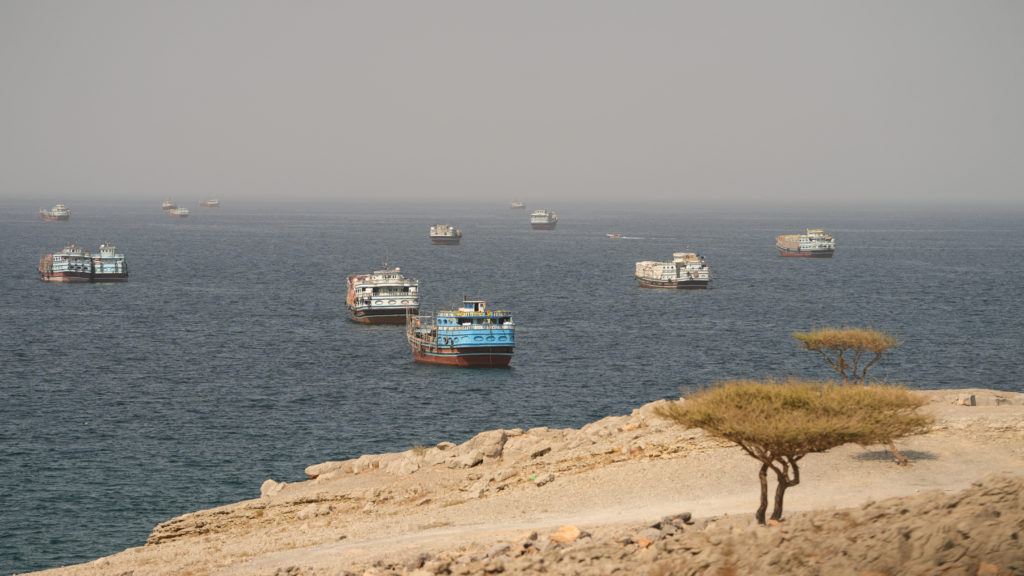
Iran says its forces damaged seven oil tankers in the Strait of Hormuz overnight; AP could not confirm any of them
Trump says Iran is doing "everything they can" to push up oil prices before the Nov. 3 midterms, and Iran threatened U.S. bases if American escorts keep guiding ships through.
- Sept. 23 — Iran offered to reopen the Strait of Hormuz if the U.S. lifted its naval blockade; daily traffic had fallen to two ships. - Sept. 25 — Iran proposed a seven-day ceasefire plan to reopen the strait; Trump rejected it, and the WSJ reported he expected bombing to resume after the midterms. - Sept. 30 — A Qatari compromise stalled; U.S. officials said major combat could return after the Nov. 3 midterms. - Oct. 2 — Secretary of State Marco Rubio ordered Iran's UN delegation out of New York; Trump said Iran would "sign a very fair deal, or they won't exist." - Oct. 8 — Congress's research service counted 81 U.S. aircraft and drones lost or damaged in the war, up from 42 in May. - Oct. 11 — Iran's security chief Mohsen Rezaei said Tehran had stopped answering U.S. offers and threatened undersea cables and data centers. - Oct. 13 — The FT counted 24 ships targeted in two weeks, a war record; Singapore-flagged container ship GFS Pride sank in the strait. - Oct. 17 — Iran's Guards said two tankers hit mines; CENTCOM said about 97% of roughly 400 ships crossing that week got through unhit.
ContextBefore the war, the strait carried about 20 million barrels of oil a day in 2024, about a fifth of world consumption, per the U.S. Energy Information Administration. Few other routes exist. Saudi Arabia's East-West pipeline, which skirts the strait, now moves 7 million barrels a day, up from 2 million, Aramco's CEO says.
PBS NEWSHOUR4 sources