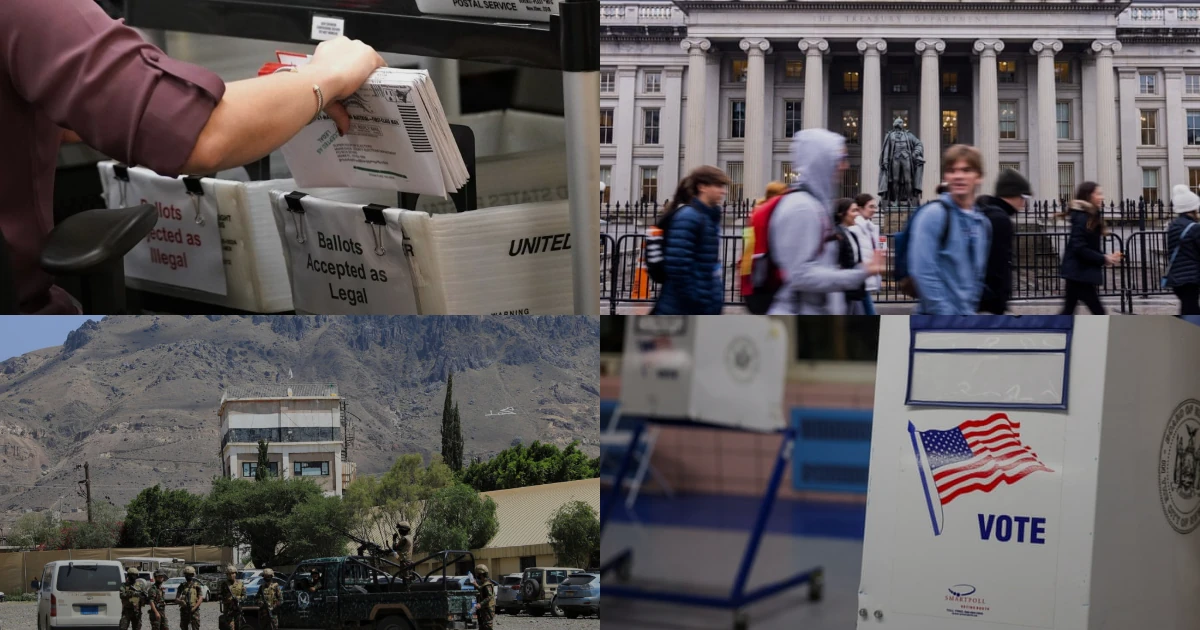
Supreme Court leaves Trump's USPS mail-ballot rules blocked for Nov. 3 midterms in apparent 7-2 vote
Hours earlier, Judge Carl Nichols, a Trump appointee, separately blocked the rule, finding no law grants USPS its key powers.
- Aug. 26 — USPS finished the rule despite a nationwide order; the judge let it publish while the Supreme Court lifted an earlier block 6-3 as premature. - Aug. 27 — A Boston judge lifted the injunction; 24 states and D.C. sued hours later, arguing USPS lacks authority and voters would be disenfranchised. - Aug. 29 — The judge blocked USPS from rejecting ballots for 14 days, found no fraud evidence, and set a Sept. 3 hearing; DOJ appealed. - Sept. 10 — States asked the Supreme Court to keep the ballot requirements blocked. - Sept. 11 — The 1st Circuit kept the rule blocked 3-0; 7 Republican officials opposed a pre-November start. - Sept. 12 — The Supreme Court took up the administration's emergency bid to enforce the rule before November.
ContextThe Postal Service issued the rule on Aug. 21, 2026, and courts had already stopped it once: Judge Indira Talwani in Boston blocked it on Friday, Sept. 4, and the 1st U.S. Circuit Court of Appeals left that block standing on Sept. 10. Monday's order was the administration's third trip to the Supreme Court's emergency docket — fast-track requests decided without full briefing or argument — over the mail-voting plan. Timing is the crux. Alabama, North Carolina and Wisconsin are already mailing ballots, North Carolina since Sept. 4, and the Postal Service itself says every state must send military and overseas ballots 45 days before Election Day, Nov. 3. Nichols wrote that the rule exceeds 'any conception of the outer bounds' of Postal Service authority and would 'create even more confusion and misunderstanding.' Solicitor General D. John Sauer called mail-voting fraud a 'particularly pernicious species of fraud,' but the administration produced no evidence of widespread fraud, and Trump voted by mail in Florida this year. Kavanaugh's objection was about the calendar, not the power, which leaves room for a later version with more lead time.
CBS NEWS12 sources